Four Types and Functional Introduction of Slope Protection Net
First: Active Wire Rope Slope Protection Net
This slope protection net is mainly made of high-strength hot-dip galvanized steel wire ropes. All metal fittings including anchors, locking clips and support cables are also galvanized for rust prevention. The material has strong tensile strength and good weather resistance to cope with wind, rain and temperature changes outdoors. No harmful chemical substances are added in production, so it will not pollute the soil on the slope. The durable metal parts can keep stable fastening effect for decades in harsh mountain environments. It is a mature and eco-friendly geotechnical protection material.
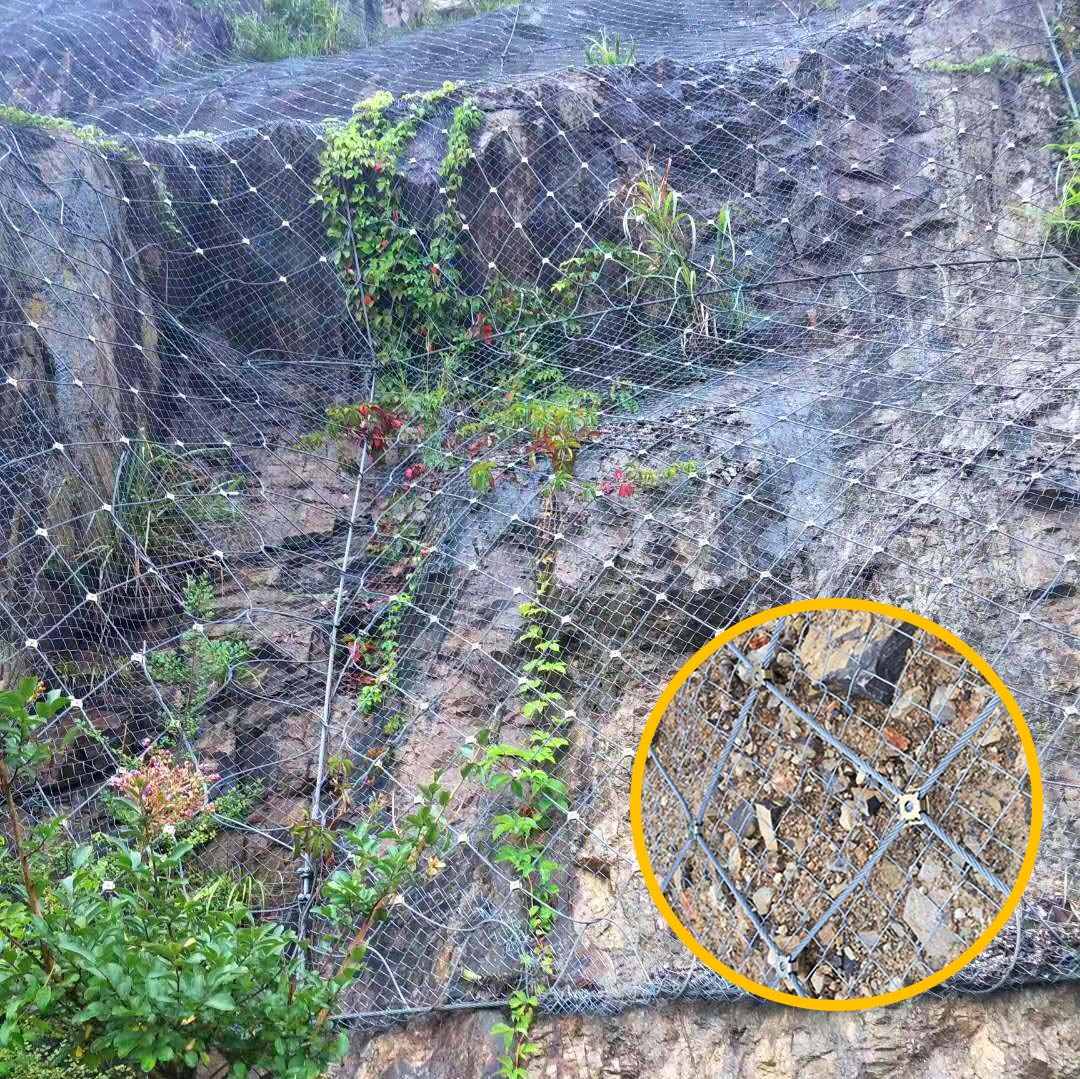
It forms flexible diamond meshes by interweaving steel ropes and locking the intersections with special clips. The whole system is tightly fixed on the slope surface through pre-tension and anchor drilling construction. Its soft structure can perfectly fit uneven and rugged rock and soil surfaces without changing the original terrain. There are natural gaps between meshes for underground water drainage to avoid water pressure damage. The modular mesh panels can be freely spliced according to different slope areas and shapes. The overall layout is neat and easy for workers to assemble on site.
Its core function is to restrain loose rocks and soil directly on the slope to prevent spalling and shallow sliding. Instead of blocking fallen stones from below, it controls geological risks at the source effectively. The net will not block plant growth, which helps realize ecological greening of mountains in the later period. It is widely used for highway cutting slopes, railway hillside sections and dangerous cliff reinforcement in scenic spots. With long service life and reliable protective performance, it has become the most commonly used active slope stabilization product
Second: Passive Ring Rockfall Protection Net
The passive ring net adopts high-toughness cold-drawn steel wire as the main raw material. Each closed steel ring is integrally formed and treated with hot galvanizing or PVC coating for corrosion resistance. Vertical support columns, anchor cables and energy dissipation accessories are all thickened galvanized steel components. The material is designed to withstand instant strong impact from rolling boulders and debris. Auxiliary small wire meshes use fine steel wires to catch tiny broken gravel. All accessories are matched to ensure the whole barrier system works safely under extreme loads.
It is composed of interlocked steel rings, mainly in 4-ring and 6-ring connection styles. Different from active nets attached to slopes, it stands vertically at a distance from the slope toe as an independent fence. The frame consists of steel posts, fixed foundations and buffer energy-absorbing devices. When impacted, the nested rings deform together to release huge kinetic energy slowly. The overall structure has good flexibility and buffer capacity against violent collision. Installation space needs to be reserved at the bottom of the hillside for the whole frame.
The main purpose is to intercept falling rocks, collapsed soil and small debris flows below steep dangerous slopes. The energy dissipation structure greatly reduces destructive force to protect facilities at the slope foot. It can bear much higher impact energy than active nets and stop large dangerous boulders. It is mostly arranged beside mountain roads, reservoir banks and buildings threatened by frequent rockfalls. Although the construction cost is higher, it provides vital secondary safety defense for people and infrastructure in mountainous areas.

Third: GPS2 Main Wire Rope Outer Net
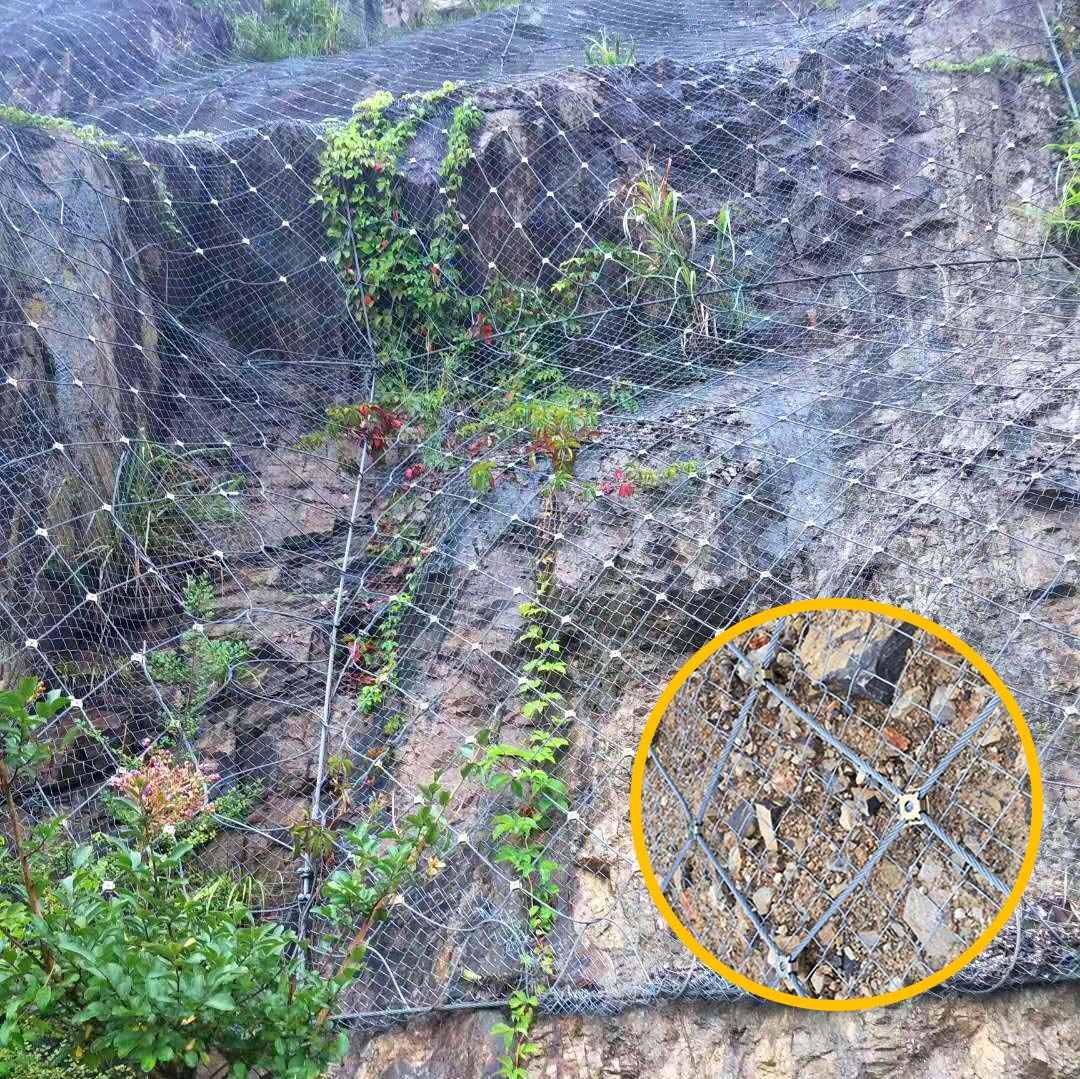
This GPS2 outer slope protection net is fabricated from multi-strand hot-dip galvanized steel wire ropes as the primary raw material. The twisted steel rope has high tensile strength, strong load-bearing capacity and excellent anti-rust performance for long-term outdoor exposure. The fixed connecting fasteners are electroplated alloy locking buckles in square and hexagonal shapes, which are hard and not easy to deform under tension. All metal components undergo complete anti-corrosion treatment to resist rainwater oxidation, ultraviolet aging and mountain air corrosion. Compared with the thin hexagonal ecological inner net, it adopts thick load-bearing steel ropes to undertake the main slope restraint force. The matched anchor rods and support cables are also galvanized steel products to ensure the overall system’s coordination and durability.
The steel ropes cross each other diagonally and are locked tightly by special alloy buckles at every intersection, forming a standard large-diamond grid structure. Each node is firmly clamped to prevent rope sliding, mesh distortion and local stress concentration during pre-tensioning construction. As the main outer bearing layer of the SNS active protection system, it directly attaches to the rock and soil surface, with the hexagonal ecological inner net laid behind it as the auxiliary filter layer. The flexible rope structure can fully fit irregular, bumpy slope surfaces without destroying the original landform. The mesh size is uniformly designed to reserve enough gaps for slope underground water drainage and avoid hydrostatic pressure damaging the hillside stability.
As the core load-bearing outer net of the active slope protection system, its primary function is to bind fractured rock mass and loose soil on the slope to stop collapse, spalling and shallow landslides fundamentally. It bears the tension from anchor points and transfers pressure evenly across the whole slope surface to control tiny geological movements effectively. It cooperates with the inner hexagonal net to block broken rock debris leaking from large diamond holes, realizing dual-layer comprehensive protection. It does not block vegetation growth, supporting later slope ecological greening and biological consolidation. It is widely applied in highway cutting slopes, railway mountain side slopes, scenic dangerous cliff reinforcement and open-pit mine slope stabilization projects.

Fourth: Ecological Hexagonal Wire Mesh Protection Net
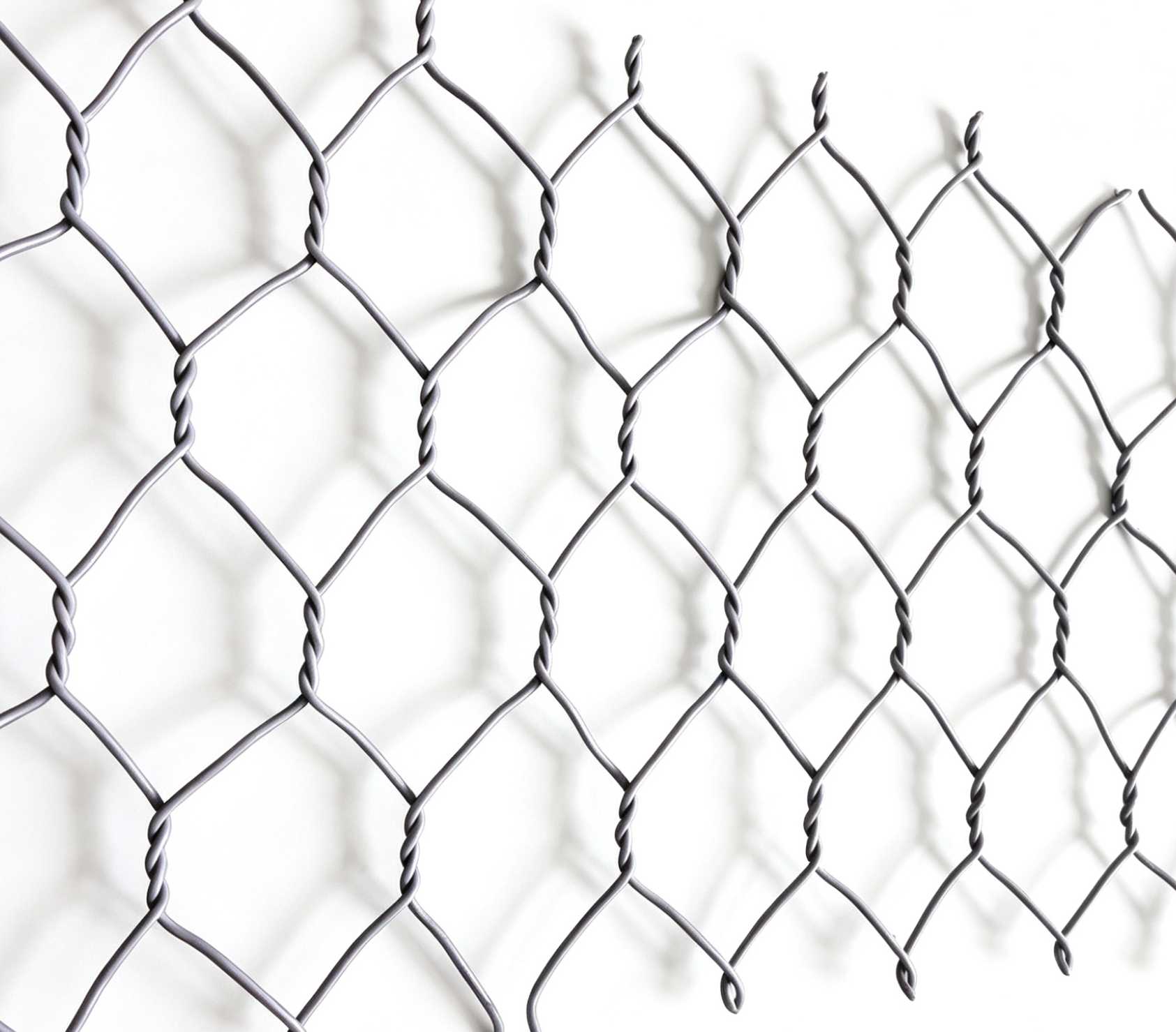
Ecological hexagonal mesh is woven from thin galvanized low-carbon steel wires with light weight and low cost. The whole wire body has basic galvanized anti-rust treatment to resist rain and oxidation. U-shaped ground stakes and binding iron wires are simple galvanized accessories for fixing on slopes. No complex alloy or thick steel materials are used in production, which greatly cuts down transportation and material expenses. The raw materials are easy to obtain and fully compliant with environmental protection requirements for ecological restoration projects.
It forms regular hexagonal holes through continuous wire weaving with balanced force distribution. The symmetrical hexagonal shape prevents local tearing under water flow and soil pressure. After slope trimming, the mesh is directly paved and fixed with ground nails on the surface. The soft woven structure can follow the slight undulation of gentle and medium slopes naturally. Workers can cut and splice the mesh freely without complicated tools on site. The thin structure takes little storage space and is convenient for mountain transportation.
Its main function is soil fixation, erosion prevention and slope vegetation greening rather than blocking large falling rocks. The mesh locks planting soil and seeds in place to avoid being washed away by heavy rainfall. Plant roots grow through hexagonal holes and form a natural biological protection layer later. It is only suitable for stable gentle slopes without steep dangerous cliffs and rockfall risks. Widely applied in river revetment, highway green slopes, mine reclamation and small watershed soil conservation projects.
Finally: Combined use of hexagonal inner mesh and diamond outer wire rope net
During the formal slope protection construction, workers first drill anchor holes on the trimmed slope surface and install anchor bolts and pressure support cables. The GPS2 wire rope outer net is stretched and fixed tightly against the rock face as the main stress-bearing layer. Afterwards, the hexagonal ecological inner net is laid flat between the outer rope net and the slope soil layer, and fastened with binding wires to the outer net nodes. The two layers are fully attached without hollow gaps. Drainage channels are reserved naturally between the grids, and finally ecological soil and plant seeds are sprayed on the surface to complete the composite protection system.
The double-layer combination gives full play to the strengths of both nets. The rigid wire rope outer net restrains large loose rocks and resists slope deformation, while the dense hexagonal inner net intercepts fine gravel, soil and planting substrate from leaking out. Compared with using only the outer net, it avoids fine debris falling through large diamond meshes. Compared with only the inner hexagonal net, it greatly improves anti-collapse and anti-impact capacity. The dual structure also optimizes water drainage and vegetation fixation, achieving perfect integration of geological hazard prevention and ecological restoration.